
Concrete fences are known for their strength and longevity, but Florida’s coastal climate introduces unique challenges that can shorten their lifespan if they’re not properly maintained. After years of dealing with the humidity, salt exposure and seasonal storms in Palm Beach, I’ve learned that durability isn’t just about choosing concrete, it’s about caring for it consistently.
Concrete is naturally resistant to rot, pests and fire, making it one of the most durable fencing materials available. But like any material, it has vulnerabilities—especially in coastal regions.
Florida’s high humidity keeps concrete constantly exposed to moisture. Add in coastal winds carrying salt, and you get a combination that can slowly penetrate unsealed concrete. In my case, I’ve seen even small, unsealed sections start to darken, weaken or show surface deterioration.
Common culprits include:
Even well-installed fences may develop issues at:
Panel joints.
Stress points around posts.
Areas where soil consistently touches the fence.
Spots with heavy vegetation or irrigation overspray.
I’ve learned that a once-a-year cleaning keeps stains, algae and dirt from settling. You don’t need harsh chemicals—just mild soap or a concrete cleaner, soft brushing and a gentle rinse. Avoid pressure washers unless used very carefully; they can open pores in the concrete or worsen small cracks.
Mistakes to avoid:
Using acidic cleaners
Allowing cleaning chemicals to dry on the surface
Blasting the fence with high pressure
Weeds and plants may seem harmless, but in Florida they trap moisture and promote algae. I always keep vegetation trimmed back and avoid letting soil pile up at the base of the fence to reduce moisture contact.
Concrete absorbs contaminants if left too long. I’ve learned to clean oil, fertilizer, salt and other corrosive substances immediately, especially after storms. A quick rinse often prevents long-term damage.
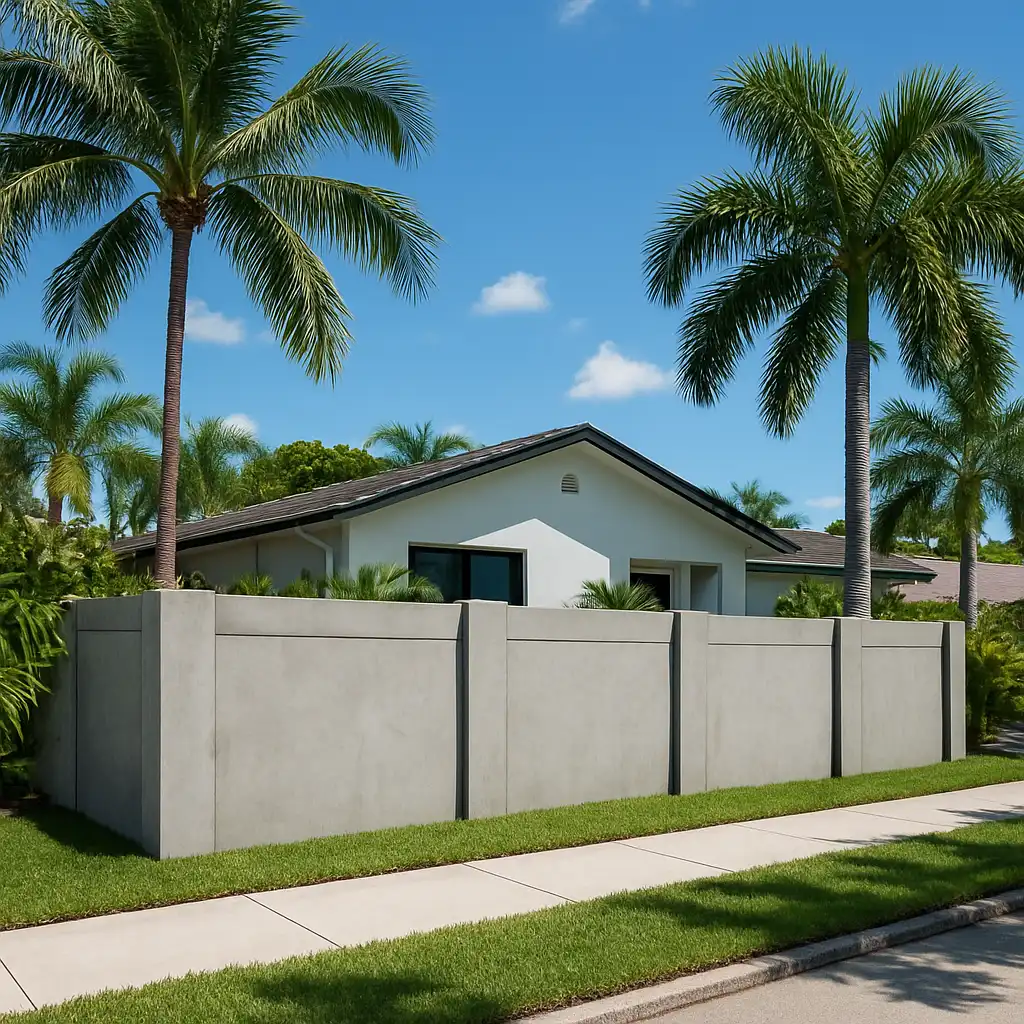
Because of the heat and humidity, Florida fences often need sealing every 1–2 years. I personally stick to a two-year cycle with acrylic sealers and it has made a huge difference in preventing moisture intrusion.
| Type | Best For | Notes |
|---|---|---|
| Acrylic sealers | Surface protection | Great for Florida; easy to apply; forms a protective barrier. |
| Penetrating sealers | Deep moisture resistance | Excellent on older or more porous fences. |
| Hybrid sealers | Balanced protection | Good option when exposure to salt is high. |
Clean the fence thoroughly.
Let it dry completely—moisture trapped under sealer causes bubbling.
Apply sealer with a roller or sprayer.
Allow adequate curing time (humidity will extend this).
A quick visual inspection a few times a year helps catch early issues. Pay close attention after storms or impact events. I focus on hairline cracks around joints and post areas where stress naturally accumulates.
Hairline cracks: Use concrete crack filler or patching compound. I always treat these fast—Florida humidity pushes moisture inside faster than you expect.
Larger cracks or structural damage: These require professional evaluation. Sometimes reinforcement or partial replacement is necessary.
Even though concrete doesn’t rot, it can absorb water over time. Proper sealing, vegetation control and avoiding long-term soil contact are key to keeping moisture at bay.
In coastal areas, green or black growth appears quickly, especially in shaded spots. I clean these areas sooner rather than later, because algae holds moisture against the surface and accelerates wear.
Salt spray is another issue—after windy days, I routinely rinse the fence to prevent surface salt buildup.
Florida storms can bring debris that chips or cracks concrete. After every major weather event, a quick inspection prevents small problems from becoming structural ones.
With consistent maintenance—especially sealing and crack repair—a concrete fence can last 25 to over 50 years, even in Florida’s harsh coastal environment. From what I’ve seen, the fences that fail early almost always lacked sealing, drainage or vegetation control.
Because Florida combines intense sun, constant humidity and salt exposure, sealing every 1–2 years is ideal. I’ve personally found that sticking to this schedule prevents most long-term issues like moisture intrusion, dark staining and surface weakening. If your fence gets direct coastal wind or frequent irrigation overspray, you might even consider annual sealing for maximum longevity.
The safest method is to use mild soap or a dedicated concrete cleaner, scrub gently with a soft brush and rinse with low to moderate pressure. High-pressure washing can erode the surface or push water deeper into small cracks. If you’re dealing with algae or mold—common in shaded Florida yards—use a cleaner specifically formulated for concrete rather than bleach, which can discolor surfaces and degrade sealers.
Hairline cracks (thin as a strand of hair) can usually be repaired with DIY crack filler. But if a crack widens, deepens or appears near structural points—such as posts or joints—it’s safer to bring in a professional. In Florida, water can quickly expand internal damage, making early evaluation essential. After storms or impacts, I always double-check cracks to make sure they haven’t grown.
Yes, salt slowly breaks down unsealed concrete by creating surface flaking and allowing moisture to penetrate deeper. If you live close to the ocean or experience strong coastal winds, rinsing the fence after high-salt days and applying high-quality sealers significantly reduces the risk. I’ve seen unsealed fences discolor and weaken much faster, while sealed ones stay in good shape for years.
Absolutely. Plants and weeds trap moisture, and in South Florida that moisture feeds algae and accelerates surface deterioration. When I started clearing vegetation regularly, I noticed far fewer dark spots and moisture marks. Keeping soil from piling against the fence also helps prevent microcracks caused by constant dampness and pressure.