
Choosing the right materials for a shadowbox wood slide gate is not just about looks. Unlike a fixed fence panel, a sliding gate is constantly under stress: weight, movement, vibration, and exposure to the elements all work against its longevity. Based on practical experience and proven construction principles, durability comes down to a smart combination of wood selection, structural reinforcement, and protective finishes.
A shadowbox slide gate combines two challenges:
Alternating boards that add visual depth but also extra weight.
Horizontal movement, which increases the risk of sagging, twisting, and hardware failure.
I’ve seen beautifully built gates fail prematurely simply because the wood was too heavy for the frame or the hardware wasn’t designed for long-term outdoor use. That’s why durability starts with selecting materials that balance strength, stability, and resistance to moisture and decay.
Cedar is one of the most popular choices for shadowbox gates—and for good reason. It’s naturally resistant to rot and insects, relatively lightweight, and easy to work with.
From hands-on experience, cedar performs especially well for slide gates because its lower weight puts less strain on rollers and tracks, reducing long-term wear.
Pros
Cons
Softer wood, can dent more easily.
Higher cost than treated pine.
Redwood offers similar benefits to cedar but with added dimensional stability. It resists warping and shrinking better than many softwoods, making it a solid option for wider gates.
That said, redwood is often chosen for aesthetics as much as performance, and the price reflects that.
Pressure-treated pine is the go-to option when cost matters. When properly dried and sealed, it can last many years outdoors.
In practice, I’ve found that pressure-treated pine must be paired with strong framing and diagonal bracing. Without it, the gate is far more likely to sag as the wood dries and shifts over time.
Best use case: budget-conscious builds with reinforced frames.
Cypress contains natural oils that resist moisture and insects, making it an excellent middle ground between cedar and hardwoods. In humid or coastal climates, it performs exceptionally well when sealed correctly.
Ipe is in a class of its own. It’s incredibly dense, extremely durable, and resistant to rot, insects, and moisture.
However, from real-world use, Ipe’s weight can be a double-edged sword. While the wood itself will last decades, it demands heavy-duty steel framing and premium sliding hardware. For residential gates, the cost and complexity often outweigh the benefits unless maximum durability is the goal.
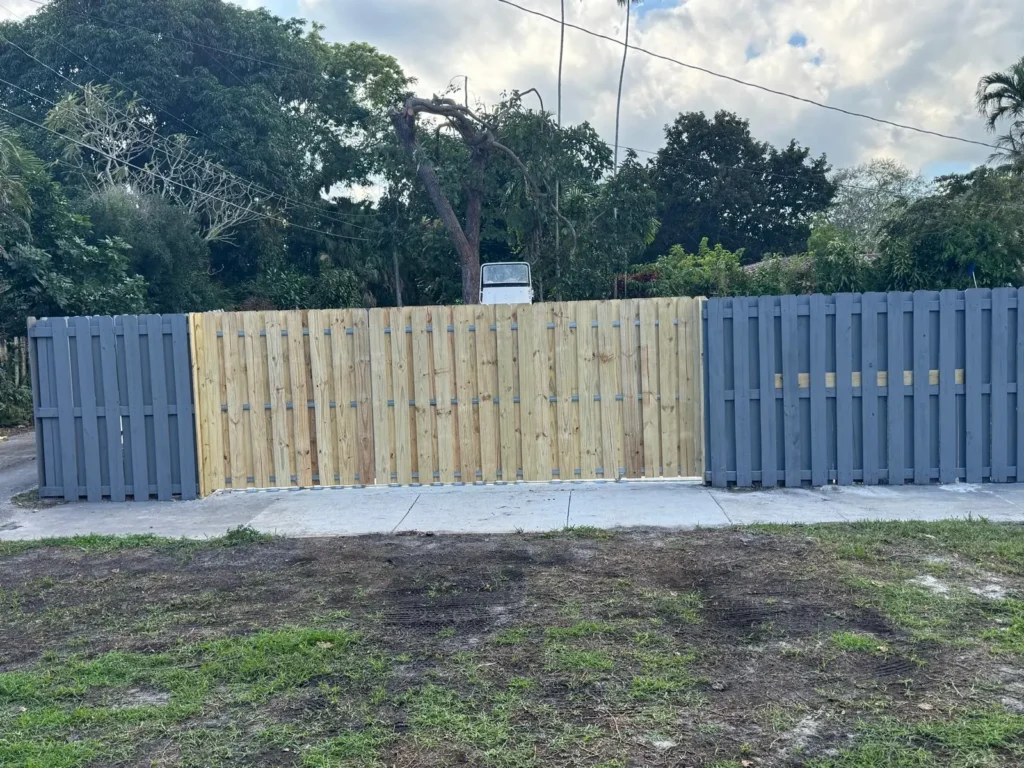
A common mistake is assuming that the most expensive wood automatically makes the best gate. In reality:
Cedar or cypress + strong framing often outperforms poorly supported exotic hardwoods.
Premium woods only shine when the entire system—frame, rollers, track, and posts—is designed to handle the load.
Durability is a system, not a single material choice.
No matter which wood you choose, these elements are non-negotiable:
Galvanized or stainless-steel hardware
Steel or reinforced wood frames
Diagonal bracing to counteract gravity and movement
From experience, diagonal bracing is one of the most overlooked details—and one of the most important. It dramatically reduces sagging over time.
Sagging is the number-one failure point for sliding wood gates. To prevent it:
Use a rigid frame (often steel-wrapped or steel-core).
Keep infill boards slightly off the ground.
Avoid overbuilding with excessively heavy lumber.
Ensure rollers and tracks are rated well above the gate’s weight.
When I’ve applied these principles consistently, even budget materials have held up far better than expected.
A high-quality exterior sealant is just as important as the wood itself. Penetrating oil finishes or UV-resistant sealers help:
Slow moisture absorption.
Reduce cracking and checking.
Extend the gate’s lifespan significantly.
Regular re-sealing—every 1–2 years depending on climate—makes a noticeable difference in long-term durability.
Choosing wood based on looks alone.
Ignoring gate weight when selecting lumber.
Using non-galvanized fasteners outdoors.
Skipping diagonal bracing.
Failing to seal all sides of the wood.
Most premature failures come from one or more of these mistakes—not from the wood species itself.
The longest-lasting wood for a sliding gate is Ipe, thanks to its extreme density and natural resistance to rot, insects, and moisture. In the right conditions, Ipe can last several decades with minimal deterioration. However, its weight makes it better suited for heavy-duty installations with reinforced frames and premium hardware.
For most residential shadowbox wood slide gates, cedar, redwood, and cypress offer an excellent balance of longevity, stability, and manageable weight. When properly sealed and maintained, these woods can last many years while putting far less strain on the sliding system.
Pressure-treated wood can be a good option for sliding gates, especially when working within a tighter budget, but it requires extra care. Because it is chemically treated, the wood tends to retain moisture initially and can shrink or warp as it dries.
From practical experience, pressure-treated pine performs best when:
It is fully dried before installation.
It is reinforced with a strong frame.
Diagonal bracing is added to prevent sagging.
All surfaces are sealed properly.
When these steps are followed, pressure-treated wood can be durable and cost-effective, though it typically won’t match the long-term stability of cedar or redwood.
Preventing sagging starts with structural design, not just material choice. The most effective methods include using a rigid frame (often steel-reinforced), installing diagonal bracing, and selecting hardware rated well above the gate’s actual weight.
In real-world installations, sagging is most often caused by gates that are too heavy for their framing or by insufficient bracing. Keeping the gate slightly elevated off the ground and ensuring smooth, level tracks also plays a major role in maintaining long-term alignment.
Ipe can be worth it if maximum durability and minimal maintenance are your top priorities and your budget allows for it. Its resistance to rot and wear is unmatched among commonly used woods.
That said, Ipe’s extreme weight means higher costs for framing, rollers, tracks, and labor. For many homeowners, the added expense doesn’t provide proportional benefits compared to high-quality cedar, redwood, or cypress paired with proper construction techniques.
Most wood slide gates should be sealed every 1–2 years, depending on climate, sun exposure, and wood species. In hot or coastal environments, annual sealing is often recommended to prevent drying, cracking, and moisture intrusion.
Consistent sealing dramatically extends the life of the gate. In practice, gates that receive regular maintenance tend to outlast neglected ones by many years, regardless of the wood used.